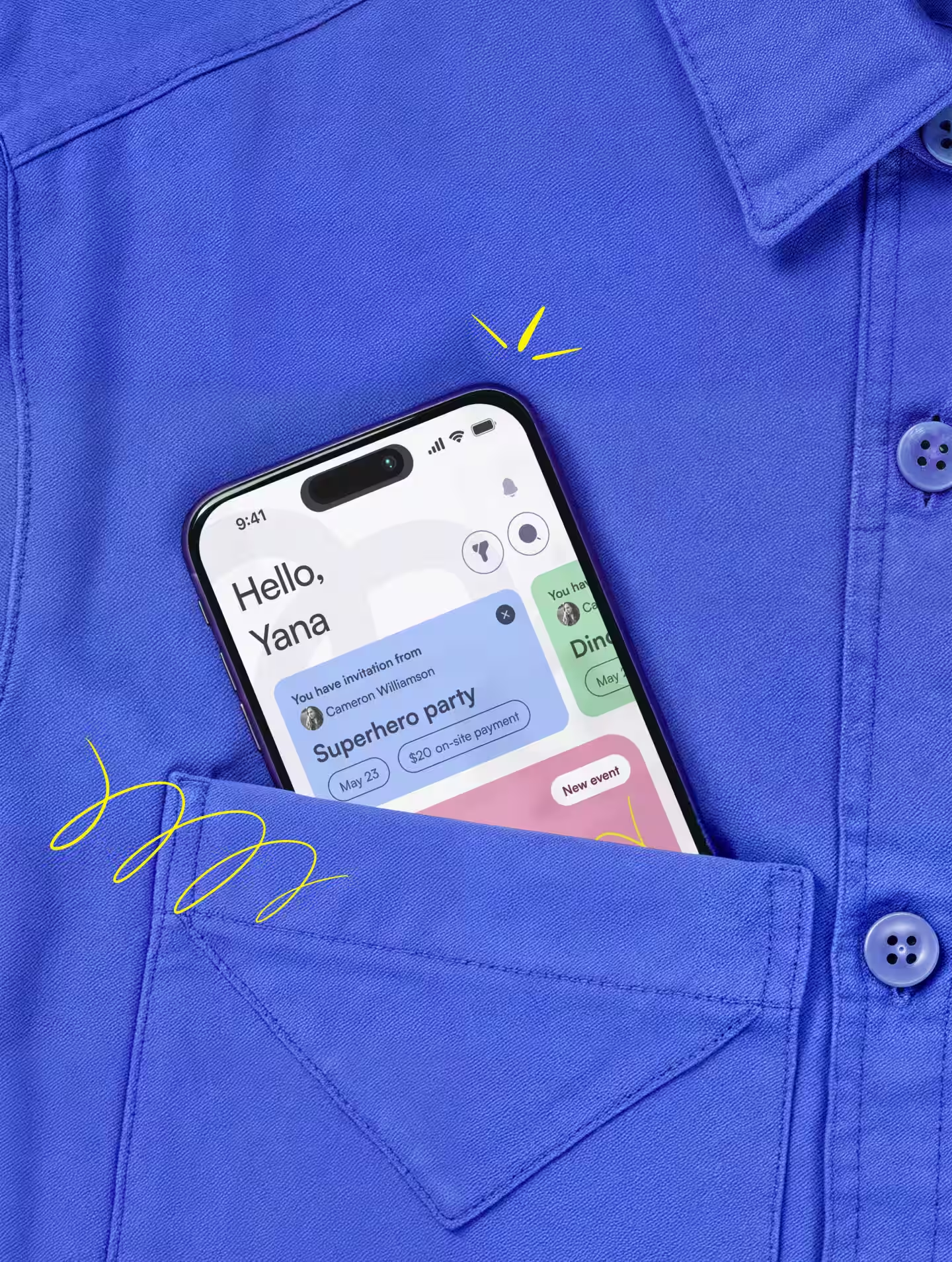
Kiddify
Problem:
Inspired by my friends’ stories of new parenthood, I wanted to make their journey a little easier and less isolating. This project became my way to support parents in finding connections, activities, and a sense of community as they navigate a new chapter in life.
What I learnt:
Through this project, I strengthened my ability to empathize with users, conduct effective research, and turn insights into practical solutions. I learned how to test ideas quickly, collaborate across disciplines, and adapt based on real feedback.
.webp)
001 Problem Discovery & Validation
The idea for Kiddify started from simple conversations with my friends who had recently become parents. They often spoke about how overwhelming it was to balance everything, but what stood out most was the loneliness they experienced. Spending almost all of their time with a baby and partner left little space for themselves or wider social connections. Listening to their stories, I felt a strong desire to help, but I knew I needed to validate whether this was a broader problem worth solving.
To truly validate the need for Kiddify, I immersed myself in the world of modern parenting and took a hands-on approach to research. I began by conducting in-depth interviews with 9 parents from different backgrounds, making sure to include both locals and emigrant families for a richer perspective. Wanting to hear from as many voices as possible, I organized a survey in three languages—English, Polish, and Russian—so that language wouldn’t be a barrier to honest feedback. My research didn’t stop there; I scanned parenting forums and lively social media groups, soaking up real stories and day-to-day struggles shared by parents in public and private spaces.
What quickly became clear was just how universal and deeply felt these challenges are. From my findings, common threads emerged: parents talked about anxiety, the relentless need to help with chores, and hardly having any “only me” time. Lack of ideas for entertainment, trouble organizing children’s activities, and the weight of isolation also rose to the top, reflected in both direct testimony and broader market numbers. Visualizing the frequency of these problems, I realized that what starts as a private struggle is, in fact, a widespread reality—one that isn’t fully addressed by existing solutions. That’s what gave me the confidence to focus Kiddify on building community, making it easier for parents to find meaningful activities and genuine support.
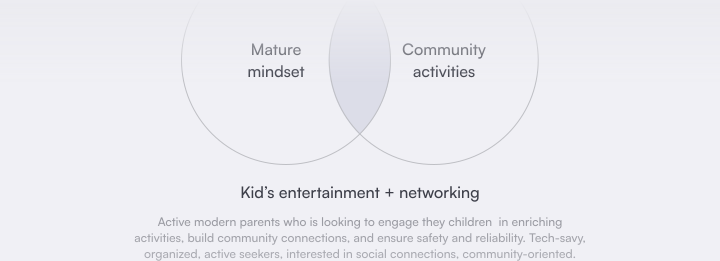
Through my research, I identified two primary target audiences for Kiddify: local parents juggling busy schedules and emigrant families seeking social connections in a new environment. Each group faces unique challenges, yet they share common struggles around feeling isolated and overwhelmed.
By mapping out their needs and pain points, I prioritized those that had the greatest emotional impact and frequency—such as finding entertaining activities for kids and building meaningful community ties. These focus areas aligned closely with Kiddify’s mission to reduce parental loneliness and make everyday life easier.
Other less urgent issues, like detailed logistics or sleep concerns, were noted for future exploration but kept outside the initial scope to maintain clarity and focus.
After diving deep into parenting struggles, I discovered that the core problem isn't just about finding activities—it's about the exhausting cycle parents get trapped in. They're dealing with isolation and constantly running out of ideas for entertaining their kids, but when they try to solve this, they hit a wall. The internet is full of information, but it's scattered, overwhelming, and often unreliable.
Here's what really struck me: parents are forced to become detectives just to organize playdates. They're jumping between Facebook groups, Instagram pages, and random WhatsApp chats, reaching out to strangers and hoping for the best. It's not just inconvenient—it's emotionally draining. Many parents told me they felt more frustrated after trying to find solutions than they did before they started looking.
This creates a perfect storm where the very act of seeking community and activities makes parents feel more isolated and overwhelmed. I realized there's a huge opportunity here. With over 40% of parents actively searching for better solutions and expressing willingness to invest in platforms that actually work, the market is ready for something that cuts through the noise and brings everything together in one trusted place.
.webp)
.webp)
.webp)
.svg)
002 Strategic Foundation
My strategic approach with Kiddify was simple: cut through the noise and solve what actually matters to parents first. I designed the MVP around four essential features—a smart event map, easy event creation/joining, real identity verification for peace of mind, and an AI Party Planner that actually helps instead of complicates. Here's what I strategically left out of the MVP: group chats and payment systems, not because they're not valuable, but because I wanted to nail the core experience first before adding complexity that could overwhelm early users.
I focused on two core user journeys that make sense: finding and joining events should be effortless, while creating and hosting should feel supportive rather than overwhelming, with a unique AI twist that transforms the nightmare of party planning into something genuinely helpful—imagine AI that finds local bouncy castle rentals, books them, and creates your event automatically. I built this as a web app that works everywhere without app store friction, knowing that busy parents won't download yet another app unless it's absolutely worth it.
The growth strategy starts local in Poland where I can perfect the community dynamics, then expands across EU using the same playbook, scaling from neighborhood connections to cross-border families who share the same struggles. Once users are hooked on the seamless event experience, we'll add those group features and payment tools that make sense, building a comprehensive platform step by step.
The business model keeps things accessible with freemium access while building sustainable revenue through subscriptions and eventually service commissions, because solving real problems for real people should actually be profitable—not just another venture-funded experiment that disappears when the money runs out.
My research identified two critical user archetypes that drive Kiddify's design strategy: Marta, the organized extroverted project manager with two boys, represents our primary "Busy Organizer" segment who needs efficient tools to coordinate community activities while managing her demanding career—her pain points around fragmented communication and coordination complexity directly validate our streamlined interface and AI Party Planner features. Viktoria, the introverted newcomer from abroad with a toddler, embodies our "Newcomer Seeker" segment who prioritizes safety and gentle integration over efficiency—her challenges with social isolation and community integration inform our emphasis on detailed event information, user verification, and low-pressure participation options.
Together, these personas represent Kiddify's complete market opportunity: Marta drives content creation and platform engagement as an early adopter organizer, while Viktoria validates our geographic expansion potential and demonstrates how the same core features serve different emotional needs—efficiency-focused coordination for confident organizers versus trust-building discovery for cautious newcomers.
Their contrasting personality profiles and user journeys prove that Kiddify's design decisions around simplified interactions, safety-first features, and flexible engagement models can successfully serve diverse user needs within a unified product experience, creating both initial platform momentum and sustainable growth scalability across different parent communities.
My competitive analysis revealed critical UX gaps in the current market that create Kiddify's strategic opportunity. Through detailed interface audits and feature mapping across competitors I identified three fundamental design problems that existing solutions fail to address effectively.
The key insight from this analysis is that no competitor combines child-focused event discovery with streamlined community building in a single, purpose-built experience.
Kiddify's differentiation strategy directly addresses these UX failures: simplified event flows eliminate Meetup's complexity, integrated AI planning solves coordination friction that Locals creates, and community-first design provides the relationship-building that transactional babysitting apps ignore. This competitive landscape validates my design decisions around efficiency, safety, and genuine community connection—three elements that existing solutions treat as separate problems but parents experience as interconnected needs.
My approach to measuring Kiddify's success combines user experience indicators with business impact metrics, ensuring design decisions drive both user satisfaction and sustainable growth. The measurement framework emphasizes engagement quality over vanity numbers, focusing on whether users actually participate in events they discover and maintain lasting community connections through the platform. Community health and safety metrics validate our core differentiators around inclusive relationship building and trust-first design, while business validation confirms that our user-focused approach creates sustainable revenue opportunities aligned with our monetization strategy.
My validation methodology emphasizes iterative testing throughout development: prototype testing with target personas validates user flows, A/B testing of onboarding experiences proves effectiveness across different personality types, and community pilot programs in select Polish neighborhoods demonstrate market fit before scaling.
The measurement approach ensures strategic milestones are evidence-based rather than assumption-driven, proving our matching algorithms work effectively, validation systems maintain high safety standards, and growth rates demonstrate product-market fit readiness for EU expansion.
This comprehensive framework creates a continuous feedback loop that improves user experience while building investor confidence in Kiddify's scalable business model—exactly the kind of data-driven product thinking that transforms good concepts into successful platforms.
.svg)
.webp)
.webp)
.svg)
003 Brand Identity
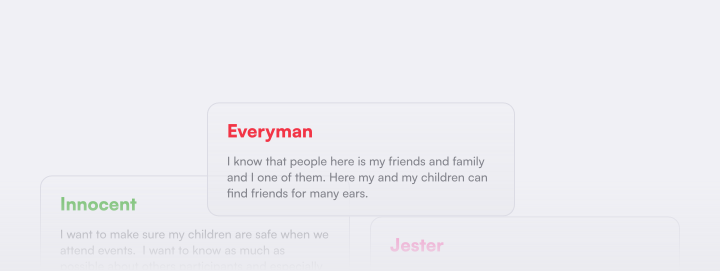
When I began crafting Kiddify’s brand strategy, my challenge was clear: create a fun and trustworthy identity that speaks to kids’ world but earns parents’ trust instantly. Drawing on the “Everyman” archetype with a splash of Innocent and Jester, my strategy aimed for a bold, eye-catching vibe grounded in empathy, reliability, and sincere welcome.
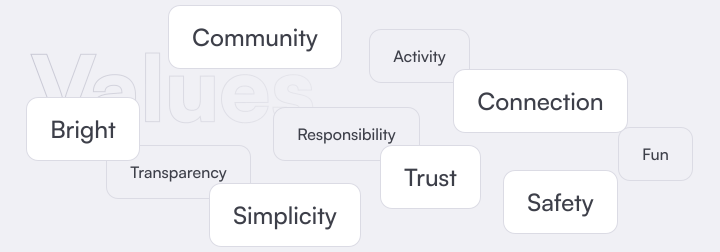
My biggest inspiration came from observing kids at play—their energy, spontaneity, and the warmth of supportive parent groups—so I made it my mission to channel that playful community spirit into every aspect of the brand. The purpose is simple: Kiddify exists to help parents safely and easily build real connections, organize events, and bring together their children for meaningful experiences.
Our beliefs center on fighting loneliness with authentic community and motivating parents to step into organizer roles, even if just for a day. The product vision is about safe, effortless networking—removing the friction of extra communication—while the mission delivers a kind, trustworthy experience that feels bold but never overwhelming. Every brand touchpoint follows a well-defined tone: friendly and reliable, visually playful and modern, and more about genuine togetherness than loud marketing.
This strategic foundation sets the tone for all design work that follows—helping Kiddify stand out from generic parent platforms, and making every family feel instantly at home.
My visual identity system transforms Kiddify's strategic foundation into cohesive design elements that work seamlessly across all touchpoints.
The logo design balances playful geometry with meaningful symbolism—the rounded letterforms echo children's natural shapes while maintaining professional legibility for parent trust. The mark design cleverly combines three core concepts: the heart represents family love, the speech bubble symbolizes community connection, and the letter K anchors brand recognition, creating a versatile symbol that works at any scale from app icons to business cards.
Color psychology drives every palette decision: caring pink serves as the primary background creating psychological safety, vibrant magenta energizes calls-to-action for belonging, bright yellow adds fun without overwhelming, and trust blue provides credibility anchors throughout the interface.
Typography selection of Satoshi bridges the generational gap with contemporary friendliness that feels both approachable for newcomers like Viktoria and efficient for organizers like Marta.
The icon system maintains visual consistency with rounded corners and friendly proportions, while graphic elements use circles, rounded rectangles, and curved lines to reinforce the brand's organic, welcoming personality.
Hand-drawn shapes add human warmth without sacrificing digital polish, and the pattern system derived from logo geometry creates scalable brand recognition across marketing materials and app interfaces. This comprehensive visual language ensures every parent interaction feels intentionally designed rather than accidentally assembled, building the trust and joy necessary for sustainable community engagement while maintaining the professional credibility that differentiates Kiddify from amateur parent platforms.
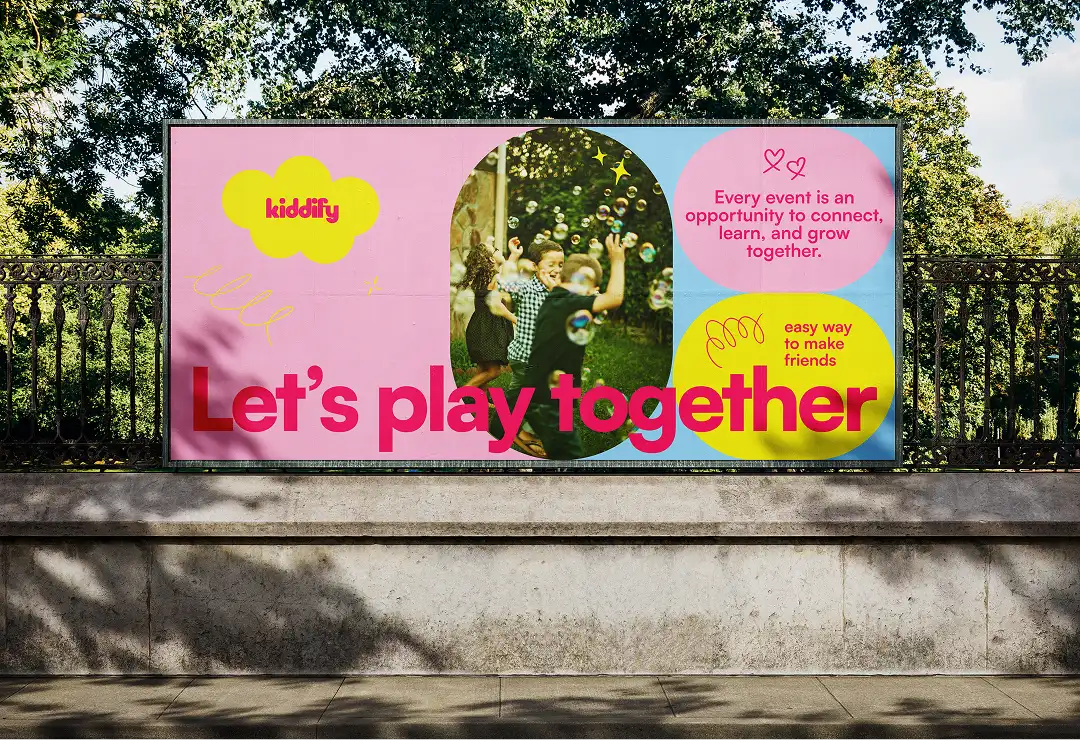
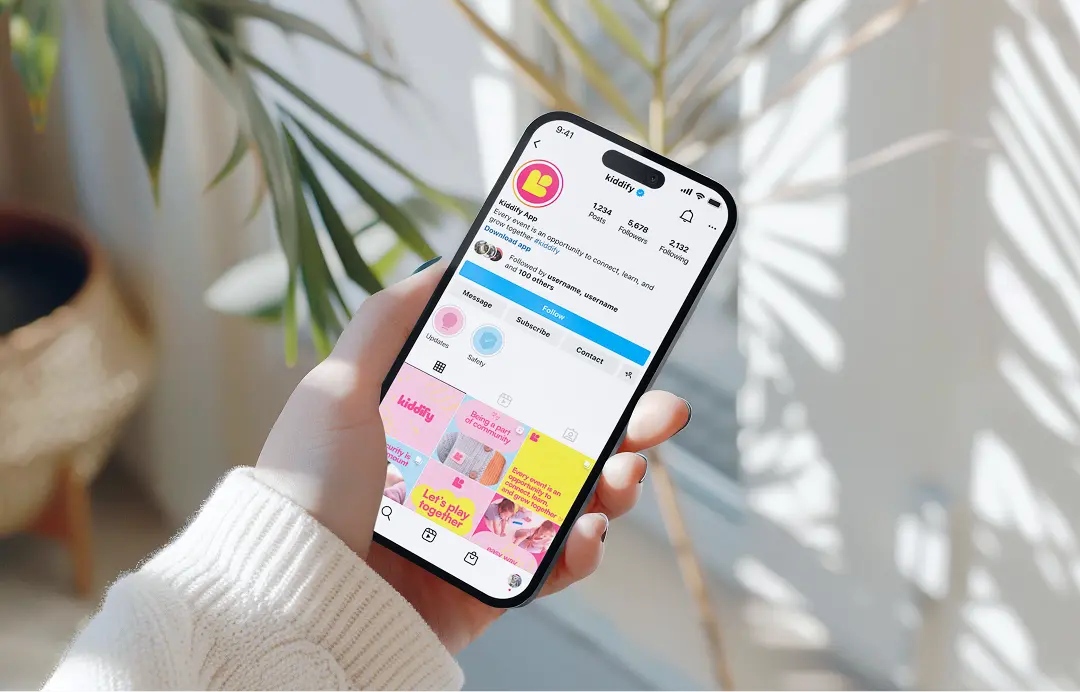
Kiddify’s brand stretches effortlessly from billboard scale to thumb-scroll intimacy: a candy-bright “Let’s play together” banner grabs parents at street level with oversized shapes and welcoming copy, while the same palette and hand-drawn squiggles reappear on an Instagram tile that flickers past in a split-second yet still feels like a direct invitation to join the fun.
By echoing color, type, and playful linework across these wildly different canvases, every encounter—whether you’re rushing past a city wall or killing time in a feed—reinforces one seamless message: this is the safe, joyful place where families connect.
To keep Kiddify flexible without losing its spark, I built a “starter-pack” brand book—lean enough for rapid rollout, yet rigorous where it matters. It locks the essentials – logo clear-space, core palette ratios, icon weight, type scale – so anything new still feels unmistakably Kiddify, then leaves spacious, clearly flagged “play zones” for future experiments in motion, illustration or seasonal colour swaps. Designers get instant plug-and-play guidelines; innovators get room to riff; and the brand stays joyfully coherent as it grows from today’s screens to tomorrow’s surprises.
.webp)
.webp)
004 Design process
Find & Join helps parents commit in under 30 seconds through event cards that reveal hosts rating, eliminating decision paralysis while building trust.
Before pixels were drawn, I mapped three critical user journeys to solve distinct UX challenges:
Create Event provides a comprehensive yet streamlined path for hosts to define all essential details—child interests, age ranges, location, parent presence requirements—through progressive disclosure and intelligent defaults that reduce cognitive load without sacrificing customization.
Manage Event creates a comprehensive host dashboard that handles the full lifecycle from join request approvals through real-time event modifications to graceful cancellations with automated participant notifications.
Each flow translates directly into measurable design hypotheses: event cards with instant rating visibility should reduce browse-to-join hesitation, multi-step creation with smart branching (AI help vs manual setup) should improve completion rates by accommodating both confident and uncertain hosts, and centralized event management with decision-point clarity should reduce host anxiety and improve response times by providing clear paths for every scenario—from accepting participants to handling last-minute changes or conflicts.
Quick sketching helped me weed out weak ideas right in the process—rough drawings revealed which navigation patterns felt clunky and which content hierarchies failed before any pixels were invested.
Sketching built the structural backbone of the entire app, establishing core screen relationships and interaction patterns through rapid iteration cycles that cost minutes, not hours.
High-fidelity wireframes then provided deeper exploration of the validated concepts, refining spacing, content priority, and component behavior with precision that rough sketches couldn't achieve.This systematic approach ensured that when final UI design began, the foundation was rock-solid and the remaining challenges were about visual polish rather than fundamental usability.
Through iterative testing with parents, I identified which event details truly matter. By prioritizing essential information like date, time, and location while reducing cognitive load, I created an interface that helps parents make faster, more confident decisions about activities for their families.
Rather than creating a complete design system—which would require team collaboration and real-world validation—I built the intelligent groundwork that makes future system evolution efficient and consistent. The result is a design foundation ready to scale from MVP to mature product without compromising the user experience that research validated.
.webp)
.webp)
.webp)
.webp)
.webp)
005 What’s next?
This project is currently paused while I recharge, but I'm excited about its potential future. My next step is implementing it with AI integration and partnering with developers to create a more robust platform. Taking time to step back has only strengthened my vision for what this could become.